Small Change, Big Stories 01
Sun, 10 Aug, 2025
Read in 7 minutes
As I look through the coins in my modest collection, I often think about the stories they could tell, the hands they have passed through. So I thought, what better way to tell history than through the most ubiquitous item throughout it: coins.

Indulge me, and join me on this short adventure…
1. One Penny - 1797 - King George III
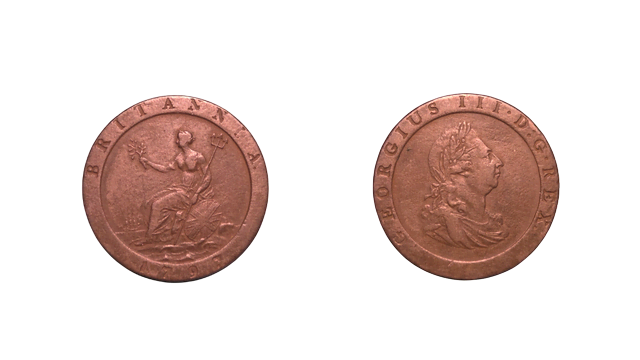
It is almost shocking just how much the humble penny has changed over the years, this example weighs just over 28 grams and has a diameter of 3.6 centimetres - a far cry from the 3.56 grams of today’s copper button. But, whilst the penny has shrunk, almost 230 years of history have played out; from wars and population booms to famines and coronations, the penny has been by our sides.
During the night of the 24th of July 1797, Admiral Horatio Nelson and 700 British troops sailed towards Santa Cruz, Tenerife. The British forces were attempting to capture the port, which served as an important trading post for the French-allied Spanish, and the British did not like the French! With cloth-padded oars, the troops were making good progress towards the crucial Spanish port, until they were spotted by the frigate San José.
The calm silence of the night was shattered as cannon balls and musket bullets filled the air, foiling the British assault and wounding Nelson. With Admiral Nelson bleeding profusely and his plan in tatters, the British retreated. Back on board HMS Theseus, a surgeon tended to Nelson’s wound, amputating his right arm to create the Admiral’s now famous lopsided portrait.
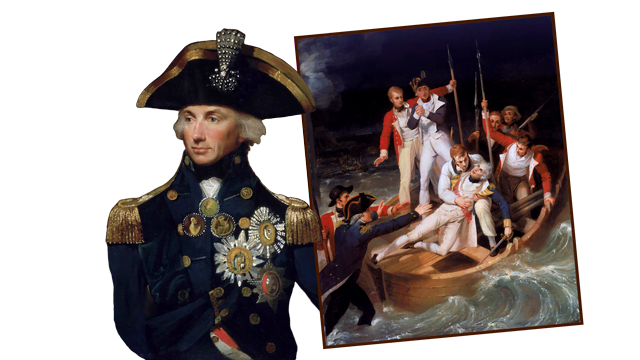
One Naval Battle and One Arm-y Battle
2. Six Pence - 1834 - King William IV
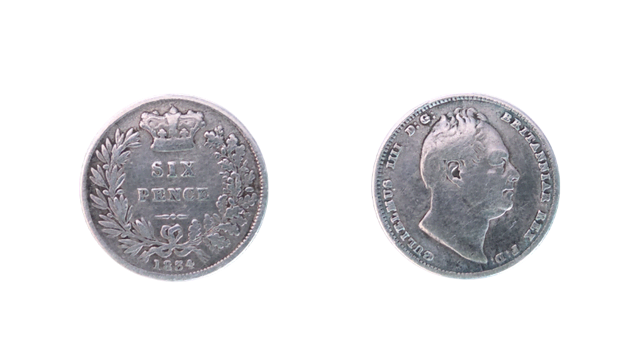
The sixpence today basks in relative obscurity, being removed from circulation in 1971 when British coinage turned decimal. In the pre-decimal system, 12 pence made up a shilling and 20 shillings equalled a pound. This meant that six pence was half of a shilling and the convenient alternative to the modern (decimal) five pence. If you think the pre-decimal system was confusing, just wait until we get to farthings!
Slavery dominated the colonial world and formed the backbone of Tudor, Elizabethan, Stuart, and Georgian Britain. By 1772, however, the tide was already beginning to change, and the Somerset v Stewart court case established that slavery had no legal basis in British law. So, this means no slavery, right? Wrong. This only meant that slavery was illegal in mainland Britain; the slave trade and use of slaves continued across the British Empire and provided cheap exotic goods to Britain.
In 1807, the Abolition of the Slave Trade Act was introduced, which put an end to the profitable transatlantic slave trade, but still did not outlaw the use of slaves across the empire. It would not be until the 1st of August 1834, when the Slavery Abolition Act of 1833 came into effect, that slavery was finally outlawed across the British Empire.
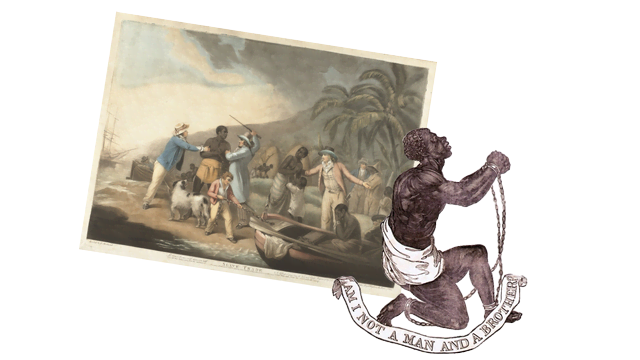
A Terrible Business
3. One Shilling - 1853 - Queen Victoria
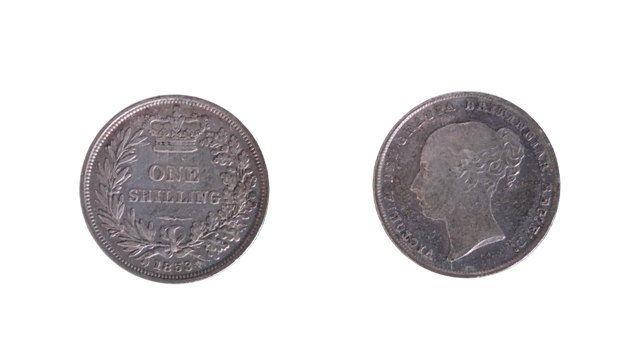
Queen Victoria is well-known as the second longest serving monarch in British history, with a staggering 63-year reign (only beaten by Queen Elizabeth II)! During that time, her portrait was updated three times and show how she aged over the course of her reign. This coin uses her first portrait, engraved when she was only 18, following her accession to the throne in 1838.
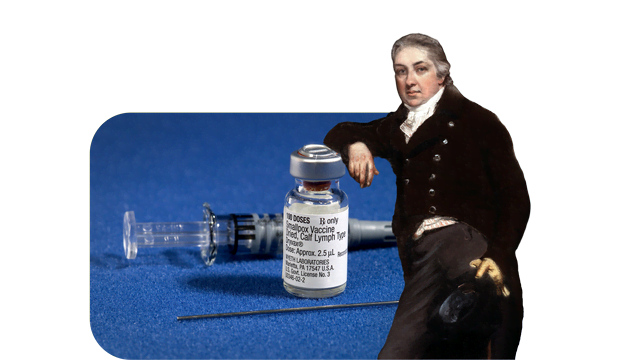
Smallpox is a disease which ravaged humanity for millennia, with records dating as far back as the ancient Egyptians. It spread across the world at an alarming pace and remained a deadly concern right up until the 20th century. In Britain, however, a solution was beginning to emerge with Edward Jenner’s 1796 discovery of inoculation using cowpox.
Cowpox is caused by a virus in the same family as the variola virus, which causes smallpox. By injecting a small sample of the cowpox virus into a patient, it is possible to prevent future infection by smallpox - Jenner had discovered vaccination! By 1853, the practice of vaccination had become commonplace, and it was deemed of such importance that the Vaccination Act was introduced, making it compulsory for all children to be vaccinated against smallpox within three weeks of their birth.
Smallpox was successfully eradicated by 1980 thanks to the resulting worldwide vaccination program, begun with the 1853 Act of Parliament.
Disease Beware!
4. Half Crown - 1895 - Queen Victoria
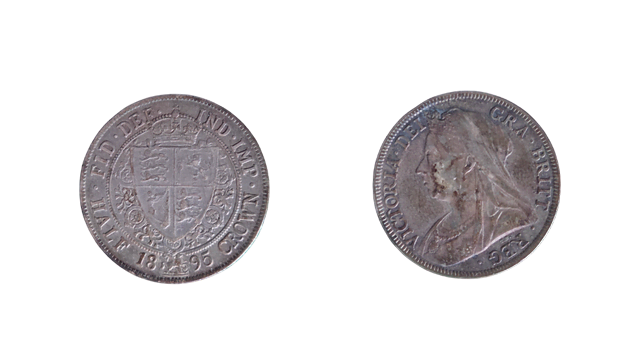
A crown was equal to a quarter of a pound, or five shillings. If a shilling is worth twelve pence, what does that make a half crown equal to? This sounds like a horrible question from a maths lesson, but dealing with coins like this was a real problem in pre-decimal Britain. The answer: two shillings and six pence - often called two and six.
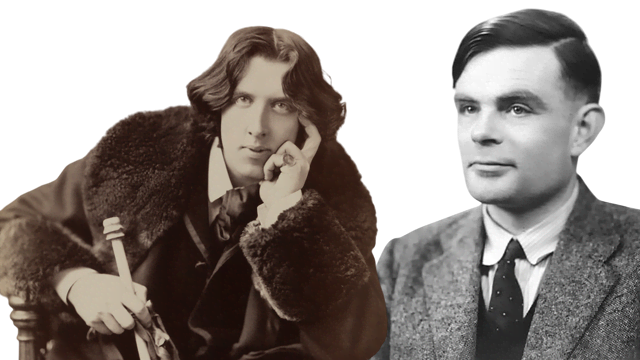
Oscar Wilde was born in 1854 and, over the course of his life, grew to become one of the most respected authors, poets, and playwrights of Victorian Britain. Often writing on subjects of society and the arts, his most successful works include The Picture of Dorian Gray, An Ideal Husband and The Importance of Being Earnest.
The Importance of Being Earnest was first performed on the 14th of February 1895 and, whilst the play triumphed, Wilde had received a calling card from the Marquess of Queensberry. The card accused Oscar Wilde of being a sodomite - a slur used against people engaging in homosexual relations. During the subsequent libel proceedings, it arose that Wilde was, in fact, homosexual, and he was charged with sodomy and gross indecency, eventually leading to his imprisonment on the 25th of May 1895.
It would take until 1967 for homosexuality to finally achieve legal status in the United Kingdom.
Icons in More Ways to Count
5. Farthing - 1914 - King George V
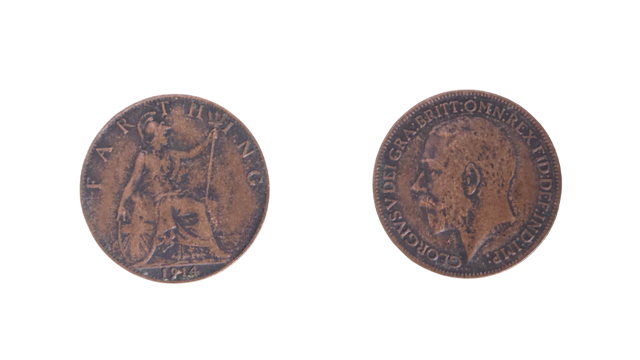
You thought the penny was the most basic coin? Wrong. The farthing was the smallest denomination in the pre-decimal system (excluding the half-farthing…) worth one quarter of a penny. That makes one pound equal to 960 farthings! A farthing is perhaps most famous today for the penny-farthing bicycle, highlighting the almost comical size difference between the penny and farthing coins.
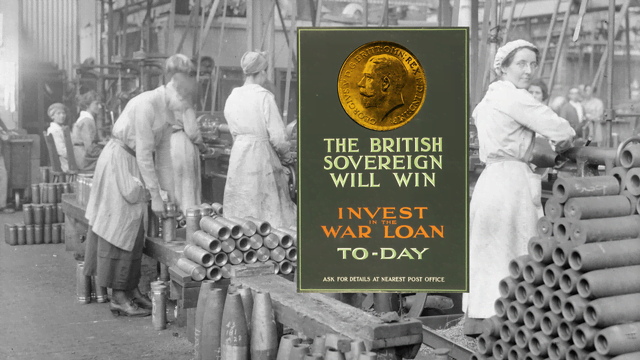
On the 5th of August 1914, The London Gazette issued a statement from the Foreign Office titled ‘A STATE OF WAR’. From 11:00 PM on the 4th of August, Britain was at war with Germany - World War One had begun. It would be four years before the world again reached peace, and the war would cost millions of lives in one of the largest conflicts in history.
During the war, the Royal Mint turned its efforts towards manufacturing munitions and medals in aid of the war effort. Gold sovereigns, worth one pound (240 pence), were switched for the more convenient and cheaper one pound banknote during this time - the legacy of the pound note would last until 1983, when it was once again replaced by a coin.
Women Have Always Run the World
Perhaps this adventure was a good idea, and maybe it was not. Either way, should enough people enjoy it, then there will almost certainly be a follow up - the coins are not yet done!
Sources
Coin images by Neo Skinner, picture compositions arranged from Wikipedia:
- “Rear-Admiral Sir Horatio Nelson, 1758-1805” by Lemuel Francis Abbott, Public domain, via Wikimedia Commons
- “Nelson wounded at Tenerife, 24 July 1797” by Richard Westall, Public domain, via Wikimedia Commons
- “Slave Trade” by George Morland, CC0, via Wikimedia Commons
- “The Official Medallion of the British Anti-Slavery Society” by Josiah Wedgwood and either William Hackwood or Henry Webber, Public domain, via Wikimedia Commons
- “Edward Jenner on a tree” by John Raphael Smith, Public domain, via Wikimedia Commons
- “Smallpox vaccine” by James Gathany (CDC), Public domain, via Wikimedia Commons
- “Oscar Wilde” by Napoleon Sarony, Public domain, via Wikimedia Commons
- “Alan Turing (1951)” by Elliott & Fry, Public domain, via Wikimedia Commons
- “The British Sovereign Will Win” by the Parliamentary War Savings Committee, Public domain, via Wikimedia Commons
- “THE ARMS PRODUCTION IN BRITAIN IN THE FIRST WORLD WAR” by George P. Lewis, Public domain, via Wikimedia Commons
Facts from Wikipedia and The Royal Mint.